In-depth profiling of mild psoriasis patients paves the way for future trials
The Dermatology group used the DermaToolbox to map the recovery of the skin in mild psoriasis after systemic treatment with a well-known biological. The comparison with moderate to severe psoriasis showed clear parallels in all relevant aspects.
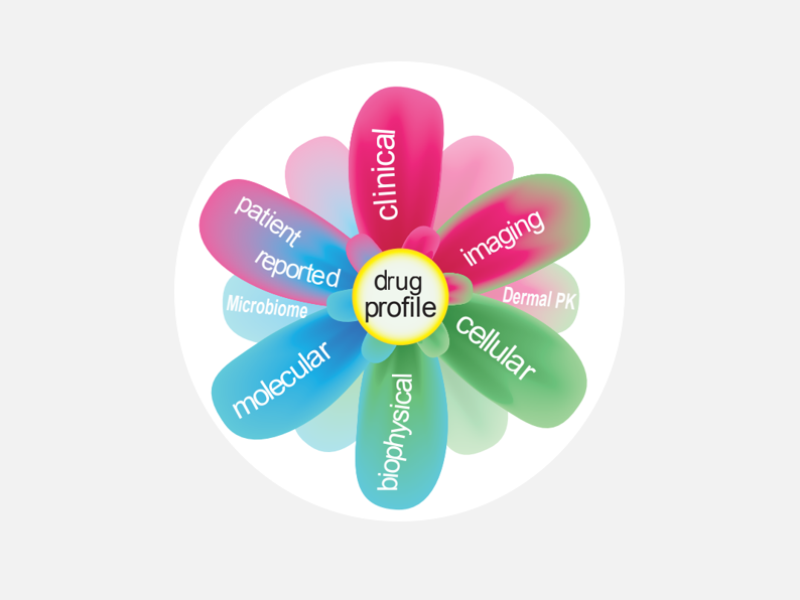
'Thanks to our multimodal DermaToolbox®, we are gaining insights into the healing process in psoriasis, as we have previously done in wound healing and in diseases of the vulva,' says Jannik Rousel, Clinical Scientist in the Dermatology group. 'Importantly, we have also found a solution to a problem in developing new psoriasis drugs: that it is almost impossible to recruit patients with moderate to severe psoriasis.' Currently in the Netherlands, almost all patients with moderate to severe psoriasis are already being treated with systemic therapy or biologicals. To test a new drug, they would have to go without treatment for a time. During this washout period, the lesions are likely to return, causing a burden for the patient. CHDR's study shows that the efficacy of an existing or new drug can also be well demonstrated in a group of patients with mild psoriasis who usually receive only topical medication.
Multimodal measurements
The study was conducted in a group of 20 patients with mild psoriasis, recruited through social media. None of them had ever received systemic treatment. They were divided into a treatment group and a placebo group. The treatment group was administered the biologic drug guselkumab, an antibody that inhibits the action of IL-23. Five patients with moderate to severe psoriasis were also followed during treatment with guselkumab. All patients were assessed regularly by a dermatologist. In addition, target lesions were followed over time with imaging techniques from the DermaToolbox: multispectral imaging, optical coherence tomography and laser speckle contrast imaging. Both the clinical assessment and the objective measurements showed significant improvements in the treated group compared to the placebo group.
'We also saw a high degree of similarity between the recovery process in patients with mild psoriasis and patients with moderate to severe psoriasis,' Rousel says. 'We are therefore confident that the results in mild patients are indeed representative and even predictive of the clinical effect in patients with more severe forms of psoriasis.' The investigators hope to learn even more from this study. Biopsies have been taken and suction blisters made, which will be used to analyse various wet biomarkers and inflammatory cells. Rousel: 'I am looking forward to the results of those measurements, but it will still take some time for the analysis.’
NGID consortium
The unique multimodal approach pioneered by the Dermatology group is a source of inspiration for the deep-phenotyping studies that CHDR will apply for a variety of conditions in other research areas. In the Next Generation ImmunoDermatology (NGID) consortium, the deep phenotyping methodology developed by the Dermatology group is being applied and implemented in all seven university medical centres. Rousel: ‘It was really fascinating to contribute to this development, by coordinating this study and keeping an overview of all the contributing researchers, ranging from laboratory to the clinic. It’s really all about bridging the gap from bench to bedside.’
Interested in learning more?
More articles from Developing methods